
Pasquale De Marinis
pasquale.demarinis@uniba.it
About me
I am a postdoctoral researcher at the Computational Intelligence Lab (CILAB), University of Bari Aldo Moro, where I earned my Ph.D. in Computer Science and Mathematics.
My research focuses on data-efficient and explainable deep learning for computer vision, with applications in large-scale and real-world visual understanding.
I currently work on few-shot semantic segmentation and edge AI, in collaboration with the Jheronimus Academy of Data Science (Netherlands), where I also spent six months of my Ph.D., and with CiTIUS, University of Santiago de Compostela, on the explainability of vision-language models.
Research interests
- Computer Vision: Semantic segmentation, Scene understanding, Object detection
- Machine Learning: Few-shot learning, Transfer learning, Explainable AI
- Applied AI: Edge intelligence, Efficient deep architectures, Sustainable computing
News
September 2026
Our paper "Matching-Based Few-Shot Semantic Segmentation Models Are Interpretable by Design" has been accepted to NeurIPS 2026! WebpageCode
July 2026
Our paper "Take a Peek: Efficient Encoder Adaptation for Few-Shot Semantic Segmentation via LoRA" has been accepted to Pattern Recognition Letters: WebpagearXivCode
May 2026
I spent a one-month research visit at CiTIUS - Centro Singular de Investigación en Tecnoloxías Intelixentes, University of Santiago de Compostela, Spain, collaborating with José María Alonso Moral on the explainability of Vision-Language Models.
March 2026
Our paper "WeedDiffusion: A Dual-Branch Synthetic Augmentation Framework for Weed Mapping" has been accepted to ICPR 2026: WebpageDOICode
February 2026
I defended my PhD thesis "Sustainable Computer Vision Techniques in Sustainable Domains", completing my PhD in Computer Science and Mathematics.
December 2025
New preprint on Few-Shot Segmentation: "DistillFSS: Synthesizing Few-Shot Knowledge into a Lightweight Segmentation Model" is now available: WebpagearXivCode
November 2025
New preprint on Interpretable Few-Shot Segmentation: "Matching-Based Few-Shot Semantic Segmentation Models Are Interpretable by Design" is now available: WebpagearXivCode
September 2025
I chaired the workshop "Advances in Drone Vision" at ICIAP 2025.
August 2025
We received the "Outstanding Paper Award" at IFSA-NAFIPS 2025 for our paper "Explainable Fuzzy GNNs for Leak Detection in Water Distribution Networks".
July 2025
Our Paper "Label Anything: Multi-Class Few-Shot Semantic Segmentation with Visual Prompts" has been accepted to ECAI 2025.
May 2025
We are organizing the workshop "International Workshop on Advances in Drone Vision" at ICIAP 2025.
September 2024
I started my visit at the Jheronimus Academy of Data Science (JADS) in 's-Hertogenbosch, Netherlands.
August 2024
Our Paper "RoWeeder: Unsupervised Weed Mapping through Crop-Row Detection" has been accepted to CVPPA at ECCV 2024.
October 2023
Our Paper "Weed mapping in multispectral drone imagery using lightweight vision transformers" has been accepted to Neurocomputing.
September 2023
I received the Best Distinction Paper Award at FEDCSIS 2023.
July 2023
I participated to DeepLearn Summer School 2023 in Gran Canaria, Spain.
April 2023
I participated as student volunteer to DeepLearn Spring 2023 in Bari, Italy.
Featured publications
-
 NeurIPS 2026
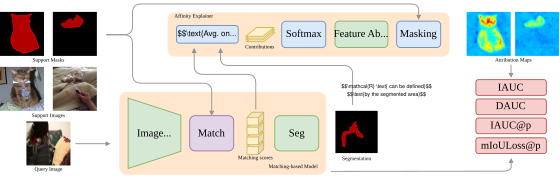
Advances in Neural Information Processing Systems (NeurIPS), 2026.We introduce Affinity Explainer, the first dedicated interpretability method for matching-based few-shot semantic segmentation. By reading the matching scores these models already compute between support and query features, it produces attribution maps showing which support-image pixels drive each query prediction, revealing that such models are interpretable by design. On FSS benchmarks it clearly outperforms adapted attribution baselines and offers practical guidance for support set selection.
NeurIPS 2026
Advances in Neural Information Processing Systems (NeurIPS), 2026.We introduce Affinity Explainer, the first dedicated interpretability method for matching-based few-shot semantic segmentation. By reading the matching scores these models already compute between support and query features, it produces attribution maps showing which support-image pixels drive each query prediction, revealing that such models are interpretable by design. On FSS benchmarks it clearly outperforms adapted attribution baselines and offers practical guidance for support set selection. -
 PRL
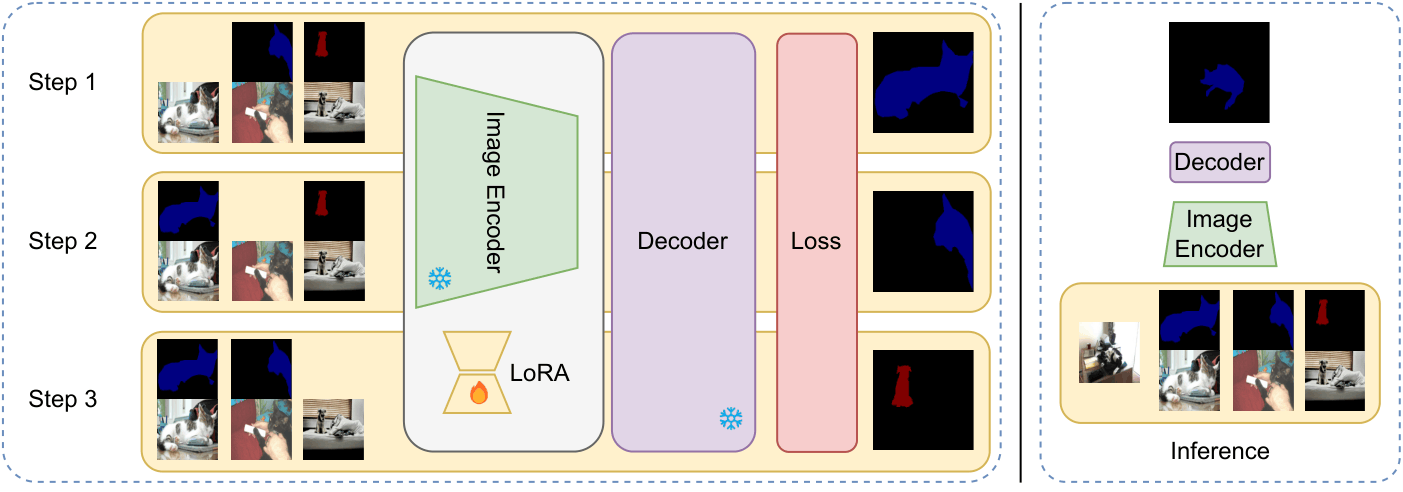
Pattern Recognition Letters, 2026.Few-shot semantic segmentation (FSS) aims to segment novel classes in query images using only a small annotated support set. We present TaP, which enhances encoder adaptability for both FSS and cross-domain FSS by inducing a lightweight feature-space shift conditioned on the support set. Leveraging Low-Rank Adaptation, TaP enables efficient encoder fine-tuning with minimal computational cost while achieving strong segmentation performance.
PRL
Pattern Recognition Letters, 2026.Few-shot semantic segmentation (FSS) aims to segment novel classes in query images using only a small annotated support set. We present TaP, which enhances encoder adaptability for both FSS and cross-domain FSS by inducing a lightweight feature-space shift conditioned on the support set. Leveraging Low-Rank Adaptation, TaP enables efficient encoder fine-tuning with minimal computational cost while achieving strong segmentation performance. -
 ECAI 2025
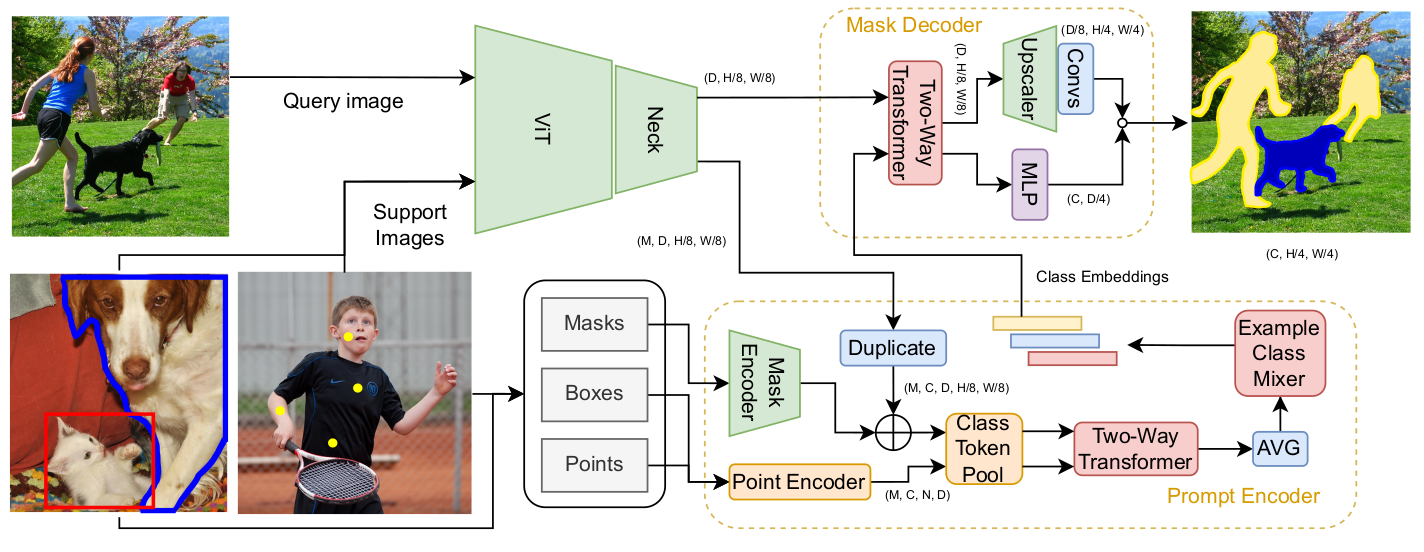
European Conference on Artificial Intelligence (ECAI), 2025.We introduce Label Anything, a transformer-based framework for multi-prompt, multi-way few-shot semantic segmentation. Our model unifies diverse visual prompts—points, boxes, and masks—into a single, flexible architecture that generalizes across tasks while reducing annotation effort. Evaluated on the COCO-20i benchmark, it achieves state-of-the-art performance and demonstrates strong multi-class segmentation capabilities.
ECAI 2025
European Conference on Artificial Intelligence (ECAI), 2025.We introduce Label Anything, a transformer-based framework for multi-prompt, multi-way few-shot semantic segmentation. Our model unifies diverse visual prompts—points, boxes, and masks—into a single, flexible architecture that generalizes across tasks while reducing annotation effort. Evaluated on the COCO-20i benchmark, it achieves state-of-the-art performance and demonstrates strong multi-class segmentation capabilities. -
 Neurocomputing
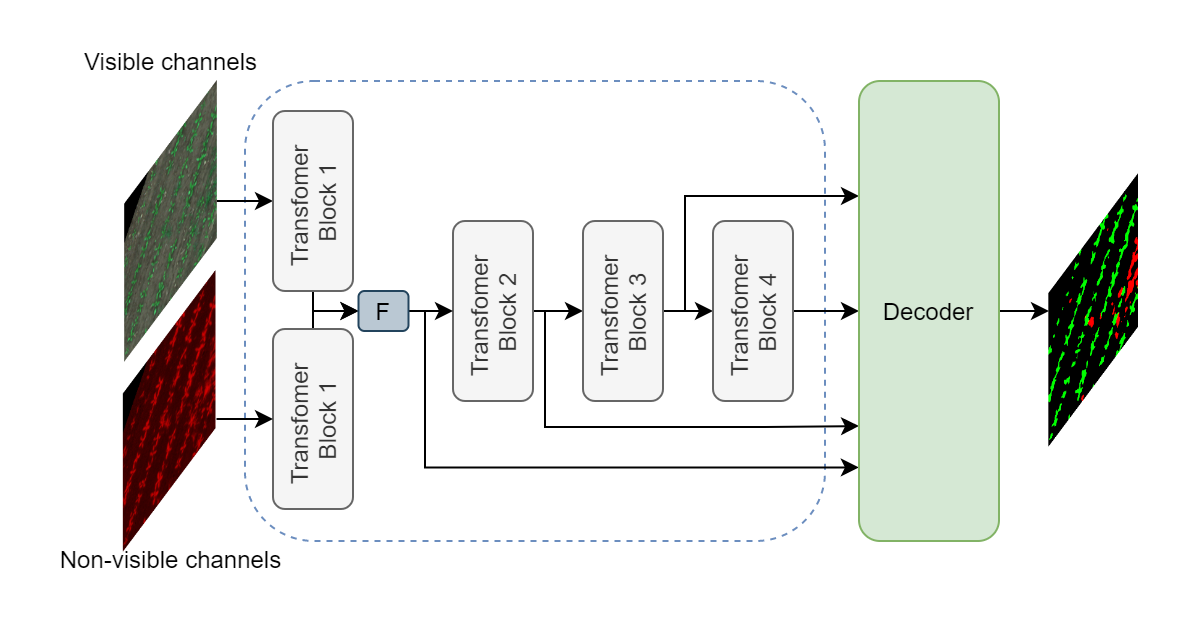
We introduce a lightweight Vision Transformer for drone-based multispectral weed mapping in precision agriculture. The model transfers knowledge from RGB pretraining to multispectral data, achieving state-of-the-art results on the WeedMap dataset and enabling efficient, non-invasive weed detection for targeted herbicide management.
Neurocomputing
NeurocomputingWe introduce a lightweight Vision Transformer for drone-based multispectral weed mapping in precision agriculture. The model transfers knowledge from RGB pretraining to multispectral data, achieving state-of-the-art results on the WeedMap dataset and enabling efficient, non-invasive weed detection for targeted herbicide management.
More publications
-
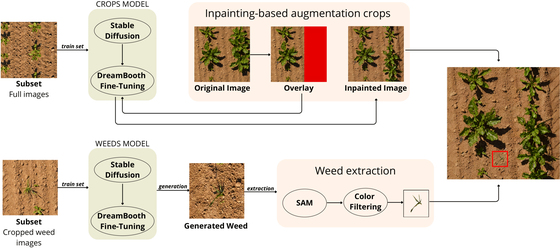 ICPR 2026
International Conference on Pattern Recognition (ICPR), 2026.Diffusion-generated synthetic imagery, crop inpainting plus weed cut-and-paste, boosts weed mapping with minimal real data.
ICPR 2026
International Conference on Pattern Recognition (ICPR), 2026.Diffusion-generated synthetic imagery, crop inpainting plus weed cut-and-paste, boosts weed mapping with minimal real data. -
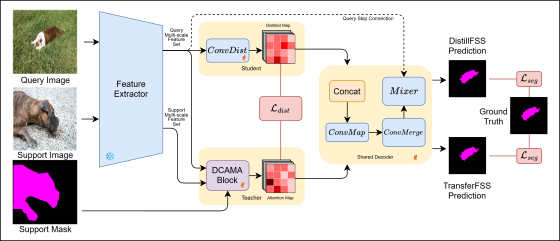 preprint
arXiv preprint, 2025.Distills support-set knowledge into a lightweight model, enabling fast few-shot segmentation on constrained hardware.
preprint
arXiv preprint, 2025.Distills support-set knowledge into a lightweight model, enabling fast few-shot segmentation on constrained hardware. -
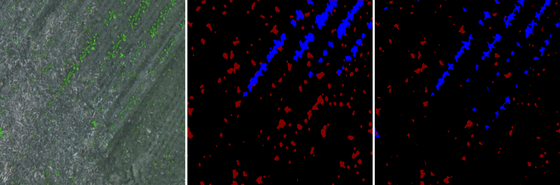 ICIAP-W 2025
Image Analysis and Processing, ICIAP 2025 Workshops, 2026.A Kolmogorov–Arnold segmentation network that outperforms UNet on weed mapping with far fewer parameters.
ICIAP-W 2025
Image Analysis and Processing, ICIAP 2025 Workshops, 2026.A Kolmogorov–Arnold segmentation network that outperforms UNet on weed mapping with far fewer parameters. -
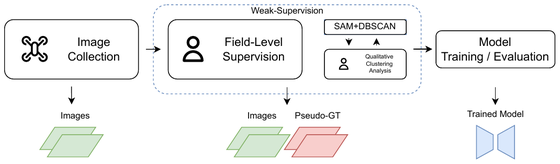 ICIAP-W 2025
Image Analysis and Processing, ICIAP 2025 Workshops, 2026.SAM- and DBSCAN-generated pseudo-labels train a crop detector with no manual annotation across four crop types.
ICIAP-W 2025
Image Analysis and Processing, ICIAP 2025 Workshops, 2026.SAM- and DBSCAN-generated pseudo-labels train a crop detector with no manual annotation across four crop types. -
 IFSA-NAFIPS 2025
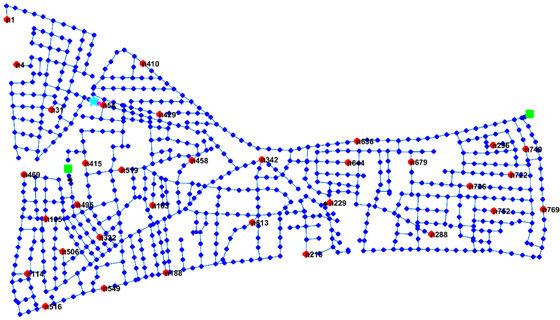
Explainable Fuzzy GNNs for Leak Detection in Water Distribution NetworksIFSA-NAFIPS 2025.Fuzzy graph neural networks localize leaks in water networks while providing rule-based explanations.Outstanding Paper Award
IFSA-NAFIPS 2025
Explainable Fuzzy GNNs for Leak Detection in Water Distribution NetworksIFSA-NAFIPS 2025.Fuzzy graph neural networks localize leaks in water networks while providing rule-based explanations.Outstanding Paper Award -
 ECCV-W 2024
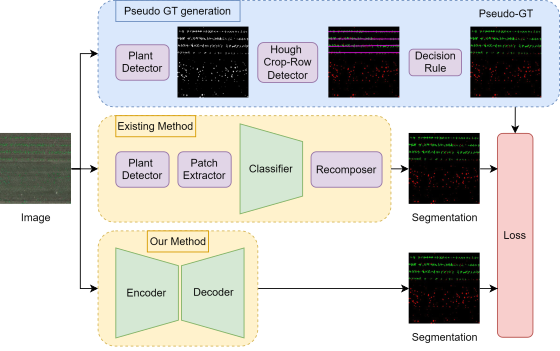
Computer Vision, ECCV 2024 Workshops, 2025.Crop-row geometry provides free supervision, training a weed detector without any manual labels.
ECCV-W 2024
Computer Vision, ECCV 2024 Workshops, 2025.Crop-row geometry provides free supervision, training a weed detector without any manual labels. -
 ECAI-W 2025
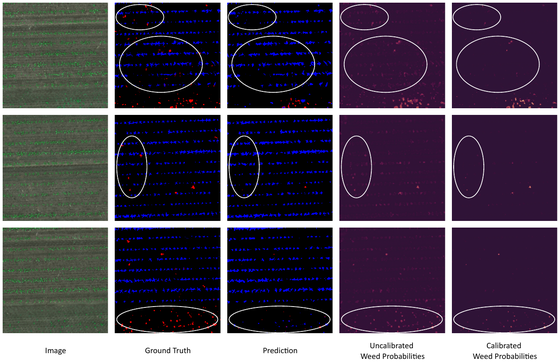
CEUR Workshop Proceedings, vol. 4165, 2025.Post-hoc calibration makes weed-map confidence scores reliable enough to drive spraying decisions.
ECAI-W 2025
CEUR Workshop Proceedings, vol. 4165, 2025.Post-hoc calibration makes weed-map confidence scores reliable enough to drive spraying decisions. -
 FedCSIS 2023
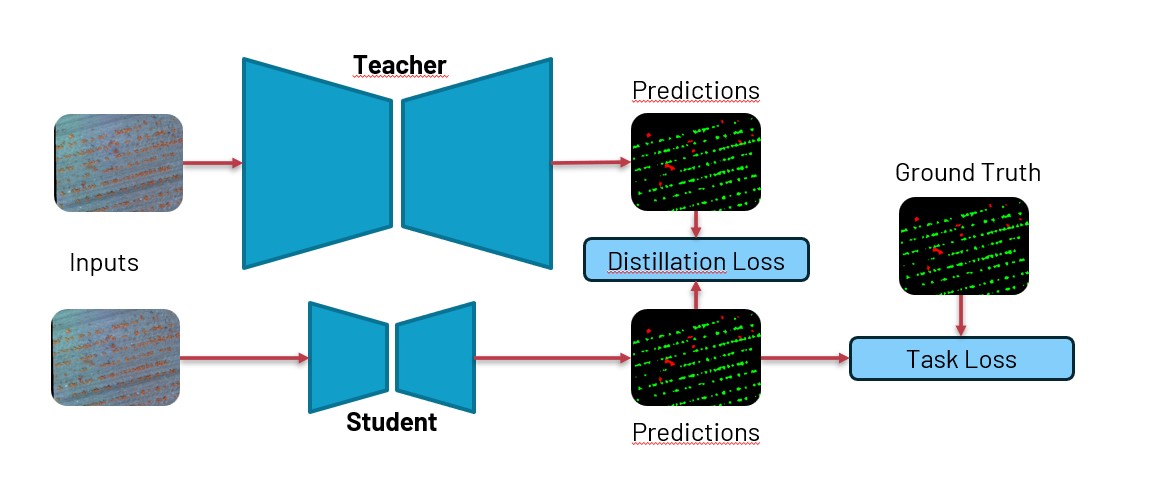
18th Conference on Computer Science and Intelligence Systems, 2023.Knowledge distillation shrinks a weed-mapping transformer to 0.5 GMacs from 42.5 while improving accuracy over the undistilled model.Best Paper Distinction Award
FedCSIS 2023
18th Conference on Computer Science and Intelligence Systems, 2023.Knowledge distillation shrinks a weed-mapping transformer to 0.5 GMacs from 42.5 while improving accuracy over the undistilled model.Best Paper Distinction Award -
 AGU 2025
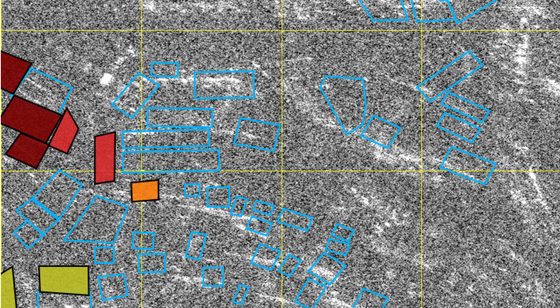
Advancing Post-Earthquake Damage Detection: Ground Validation and Deep Learning Approach from the 2023 Mw 6.8 Morocco EarthquakeAGU25, 2025.Deep learning plus field ground-truth for building-damage detection after the 2023 Morocco earthquake.
AGU 2025
Advancing Post-Earthquake Damage Detection: Ground Validation and Deep Learning Approach from the 2023 Mw 6.8 Morocco EarthquakeAGU25, 2025.Deep learning plus field ground-truth for building-damage detection after the 2023 Morocco earthquake.
Powered by Jekyll and Minimal Light theme.